Our story
It started on a terrace
 Roger BremerFounder of Toilify, Hilversum
A sticky floor, wet paper towels all around the sinks, overflowing bins. As a guest your whole experience turns in an instant the moment you walk into a restroom nobody has looked at for hours.
The seed for Toilify was planted in August 2025. I was having a pleasant lunch on the sunny terrace of a venue in Amsterdam and went inside to use the restroom. My eye went straight to the wet sinks with used paper towels everywhere and a wet floor. I dried the sinks off, gathered up the towels and pushed down the bins, so that it looked presentable again for the guests after me.
That was hardly my job as a guest.
I could also have said something to the staff. But everyone was nowhere to be found or busy, because it was a sunny day. I will not bother them with it, is what I thought.
The question that stayed with me
Is there no system that lets you, as a guest, simply flag that the restroom needs attention?
I started looking for figures on the subject. Research showed that dirty restrooms away from home are among the biggest irritations, and that in hospitality well over one in two restrooms is not up to scratch. The problem is that for all kinds of reasons people are slow to say anything to staff: they feel awkward, or they see how busy the staff are. Other studies show what that costs: guests leave sooner and are slower to come back.
I soon arrived at the smiley buttons everyone knows from the restrooms at Schiphol Airport. Those measure satisfaction: they tell you afterwards how it went, not that something needs doing right now. What I was after was the opposite. A signal that shows staff straight away that something is up, so you can step in before ten other guests run into the same thing.
Conversations with hospitality owners
I went looking in my network for hospitality owners to talk to about this. After ten or so conversations the gist was always the same: everyone recognised the problem. “We know we have to do something about it”, but also “guests do not want to see staff walking into the restroom to clean”. Or: “we already struggle to find staff, and they are not exactly waiting to clean restrooms”.
At many venues a cleaner comes in once a day, or every other day. During opening hours nobody turns out to be really responsible. Other venues have someone check each shift, or walk a round every hour. In practice that regularly gets skipped when it is busy. Now and then a guest comes up to staff to report that something is wrong, but that is a few times a month at most.
Measure first, then build
A number of owners were willing to take part in a first test. Rather than develop a button myself, I started with off-the-shelf consumer hardware. At six hospitality venues I mounted buttons on the mirror by the sinks, with a printed card next to them explaining what they did.
The question was not whether the technology worked, but whether guests would use it and what owners would get out of it.
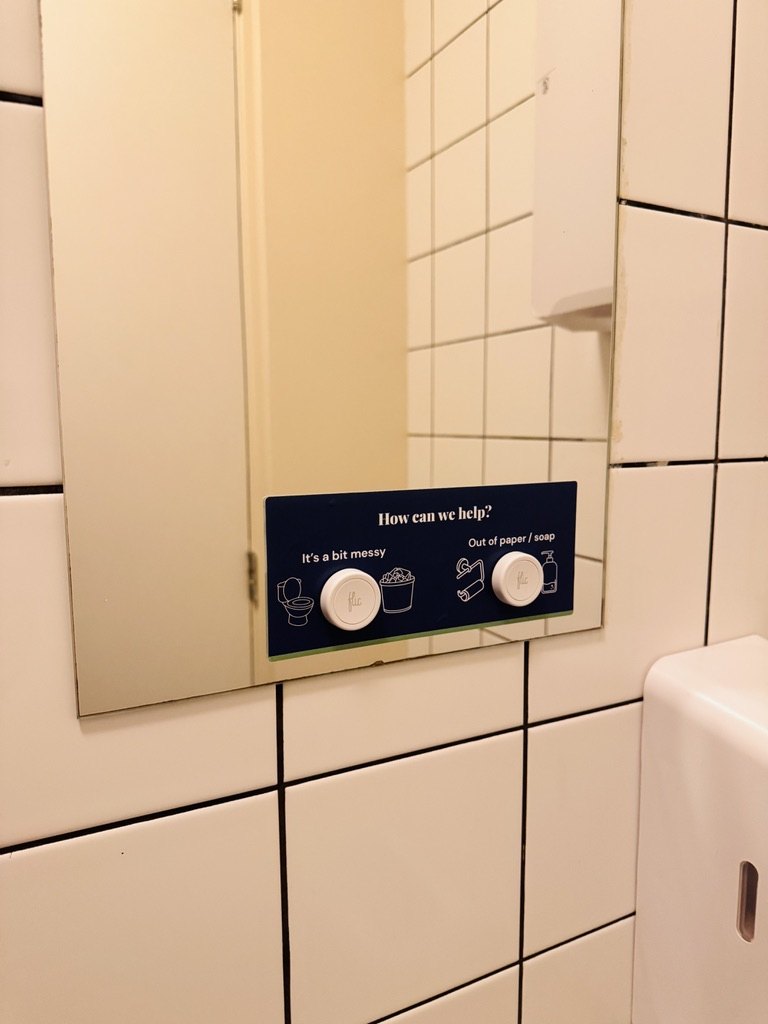
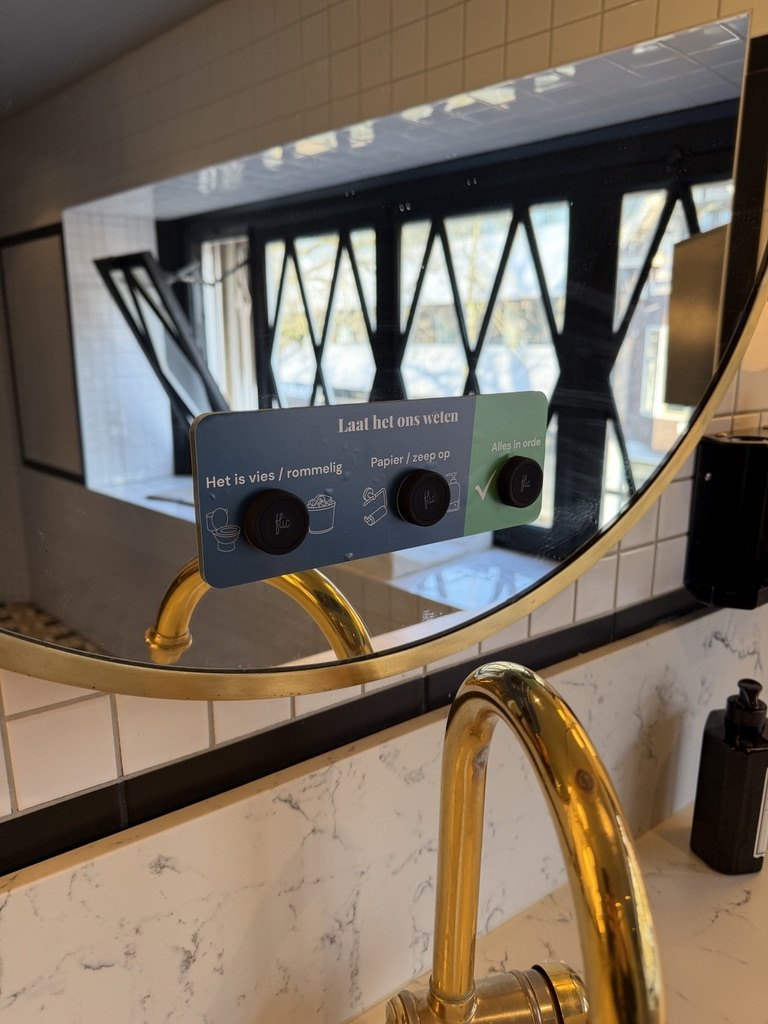
The pilot ran for six weeks per venue. The venues started at staggered times, between mid February and mid March. That way insights from the first locations could be used to improve things at the next.
Guests used the buttons a great deal. On average a venue had 3 to 5 reports a day, against the few times a month that someone says something in person. Of the 41 guests we surveyed afterwards, the large majority valued them, and said the button added to their confidence in the hygiene. Including when the restrooms were in good order.
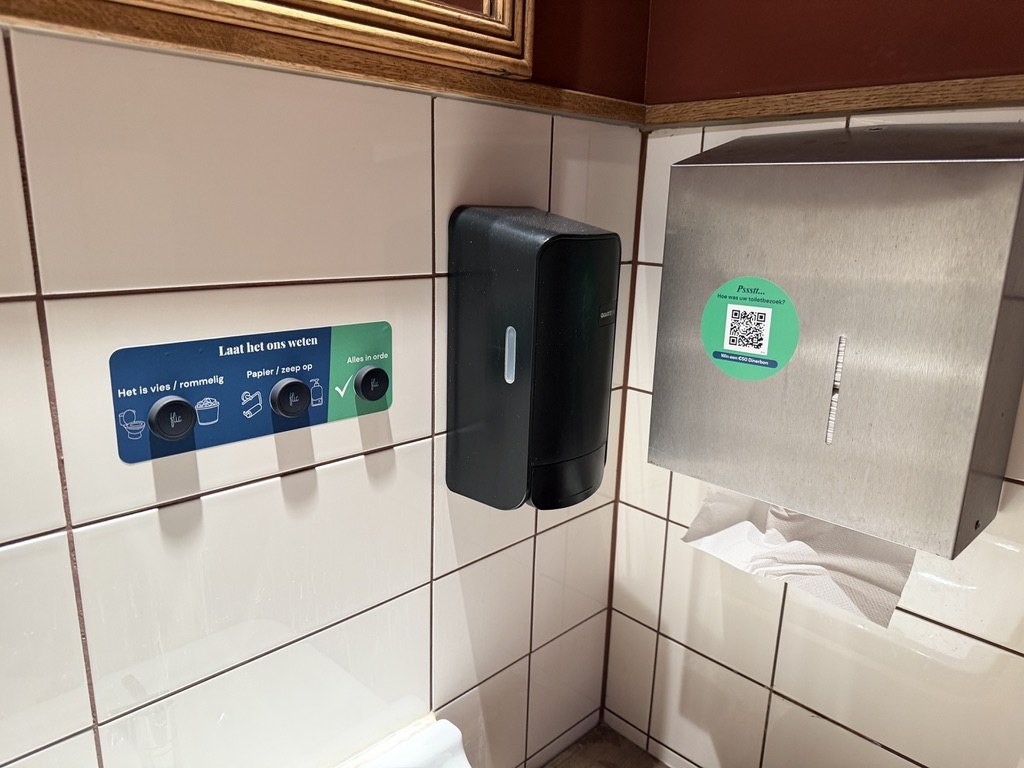
Among the owners opinions varied, from a valuable addition to unhappiness about how the buttons sat in the interior. The biggest challenge was making the reports a real part of daily operations. Because it was a pilot, it still felt like something extra on top. We took that lesson with us, and we have said ever since that simply putting Toilify on the wall does not make restrooms clean. You will have to do something with the reports yourself to really raise satisfaction.
It is not only hospitality
Busy shopping centres, premium outlets, concert halls with sharp peaks: everywhere things move fast, restroom hygiene comes under pressure, and a cleaner only has so much time.
The idea behind Toilify is that you spend that time where it is genuinely needed at that moment. Fewer rounds that turn up nothing, there faster when there is something.
Where we are now
We are now a good year further along (product development is a long game). In the meantime we have developed a button of our own, together with industrial designers and IoT developers. The requirements we took with us: a stable connection, including in restrooms in the basement or on a second floor, resistant to vandalism, and installable without needing an engineer.
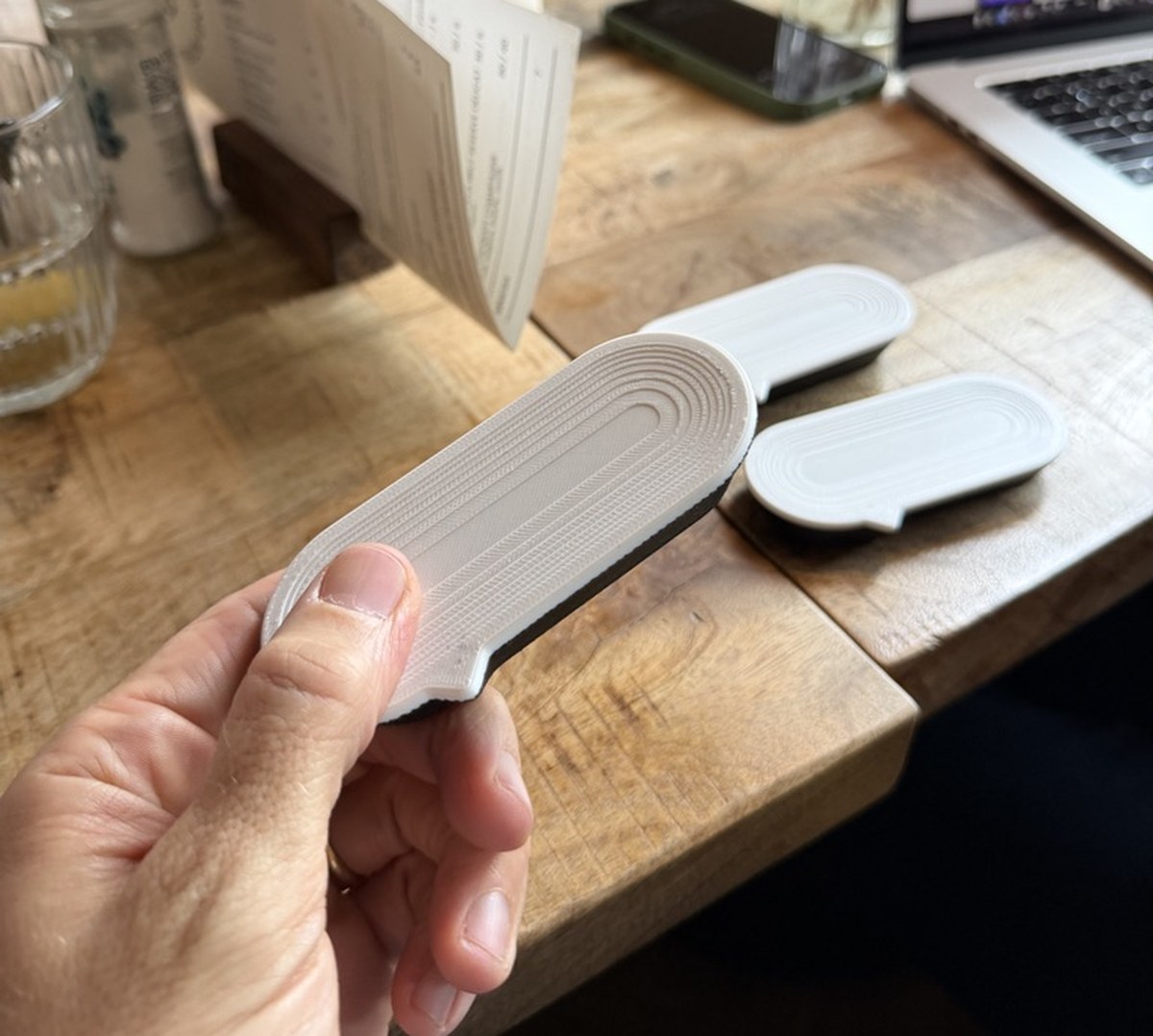
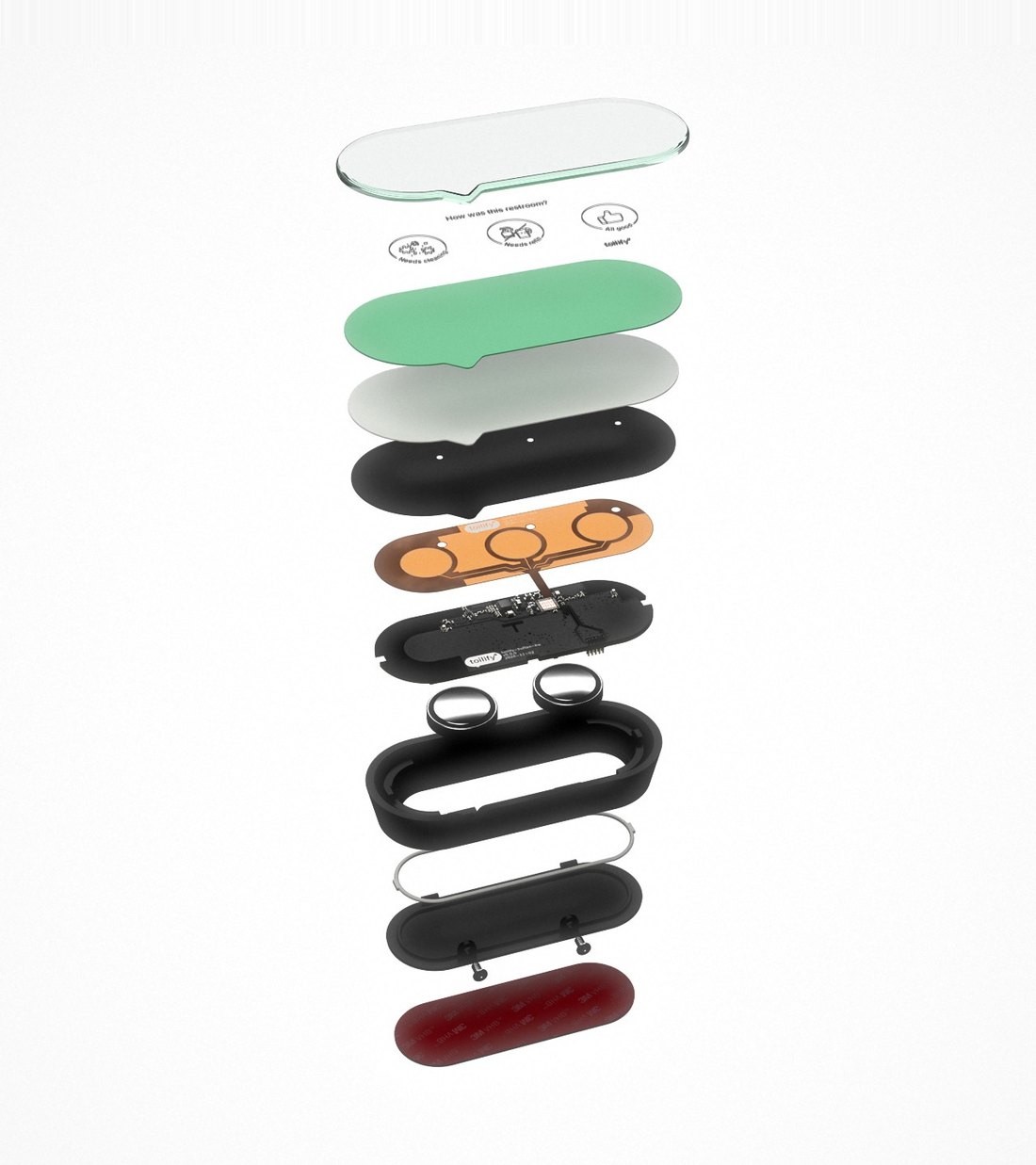
Over the coming months we are rolling this first version of our own out at thirty hospitality venues. What we learn in that phase feeds into the next stage of development.
Want to be one of those thirty pioneers?
Get in touch to see whether Toilify fits. Tell us what kind of venue you have and how many restrooms are in it.